Indian Lake, Montcalm County
AIS Survey May/June 2026
Summary June 7, 2026
Zero Gravity Aerial, LLC performed an Aquatic Invasive Species survey (AIS) of Indian Lake May 11, 14, and June 2, 2026. The method was the same as the AIS survey performed in July 2025. The same sections and flight paths were repeated. Different from the 2025 survey was the significant pollen deposited in the lake. This limited depth visually to about 4 to 5 feet especially in the central part of the lake. However, we were able to boost contrast levels of the video footage in those areas. This was not an issue in the channels and bays and we were able to make direct comparisons to the 2025 imagery for those areas.
Our findings were that not much growth of native plants and invasive plants was evident on the three visits to the lake. On our second visit to the lake, May 15, 2026 we ground-truthed areas of interest from the previous visit. On that same day we recorded many of the areas of the central portion of the lake for a second time. Of note we discovered two short stems of what appeared to be EWM in the most northeast channel of the lake. These stems had a coating of algae on them but we believe them to be EWM and that information was passed along to Clear Water Lake Management.
On the third visit, June 2, 2026 we revisited all the May 11th and the added May 14th recorded sites of interest. In addition, on the third visit documented where we observed new vegetation which all turned out to be native plants, mostly a variety of pondweeds.
The below image depicts the locations on the lake, areas of interest, with icons unique to the dates we visited.
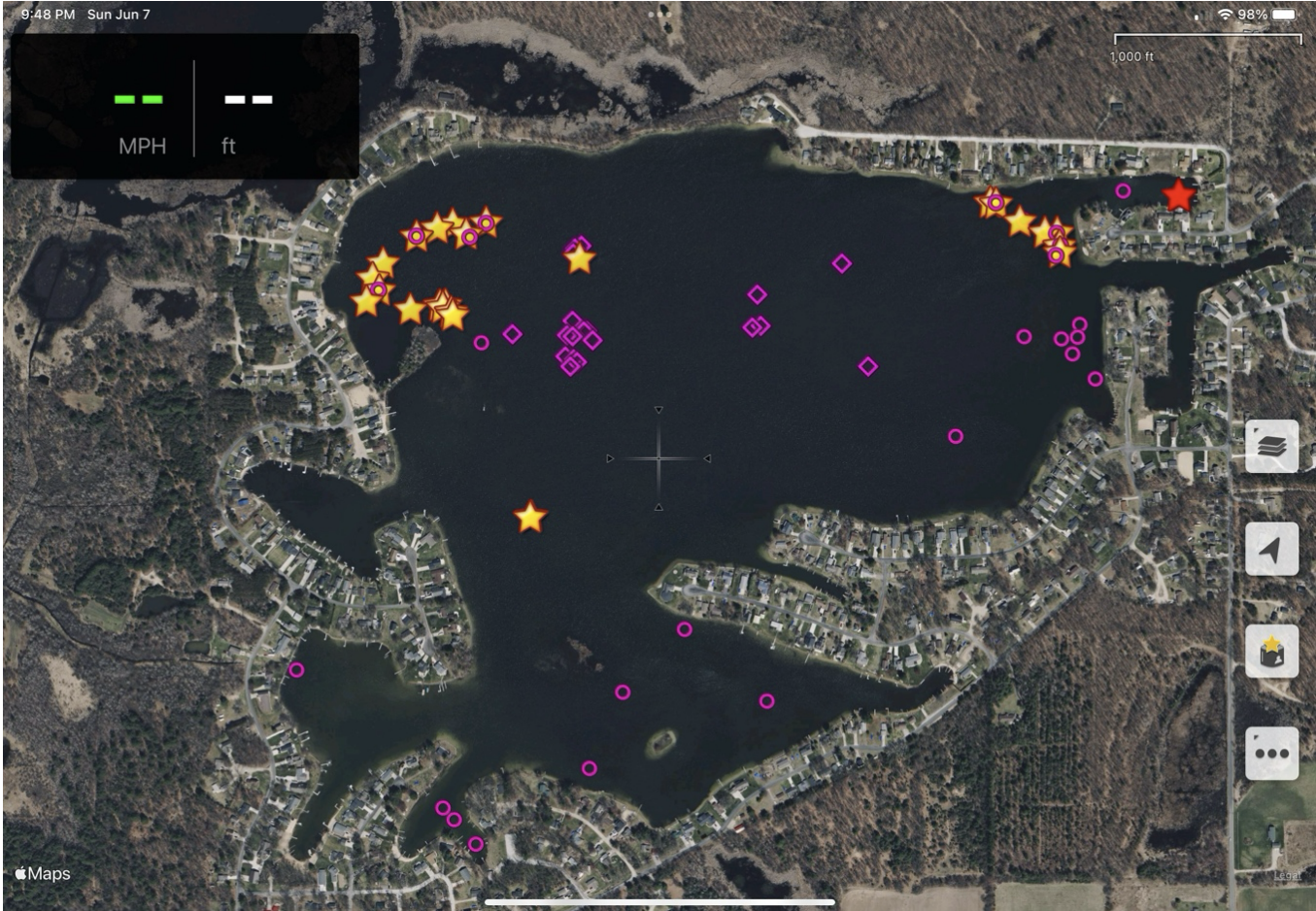
Magenta Circles = Areas of Interest Recorded May 11th Some Being Native Plants
Magenta Diamonds = Areas of Interest Recorded May 14th A Few Being Native Plants
Gold Starts = Areas of New Plant Growth Observed June 2nd
Red Star = Two Stems of EWM Recorded May 14th
In conclusion, there does not appear to be an appreciable amount of EWM in Indian Lake at this early part of the season. It is possible we missed stems of EWM due to the pollen suspended in the water column but that would be quite minimal as we were able to see fresh growth of native plants indicated.